

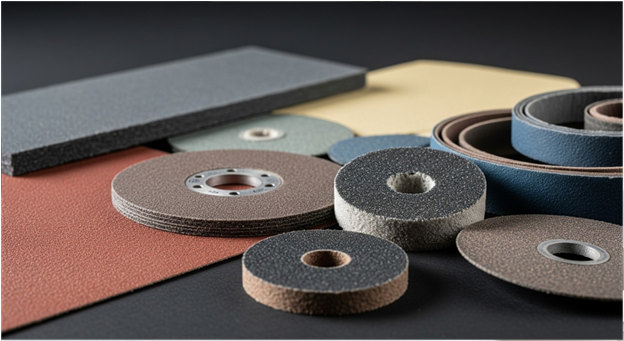
If you’ve spent time sanding, grinding, or polishing, you already know one truth, the abrasive you choose can make or break the job. Choose the wrong one, and you’ll end up fighting the surface, losing both time and energy. Pick right, and you’ll almost feel the work guiding itself. Both coated abrasives and bonded abrasives will cut, shape, or smooth, but they’re built in ways that give them entirely different personalities. Learn those differences, and you’ll work smarter, faster, and with results that actually feel worth the hours you put in.
The Secret Behind Coated Abrasives’ Flexibility
It starts out simple: grains fixed to a backing, whether that’s paper, cloth, or a synthetic film. The adhesive locks them down, and sometimes a final coat tops it off for extra durability. You’ve seen them as belts, discs, rolls, and the familiar sheets in every toolbox.
They matter because they move with you. Wrap them around a curve, fold them to get into an awkward corner, or run them along a profile without losing contact. They’re perfect for sanding, smoothing, blending, and prepping before a finish. That’s why so many shops treat them as the heart of their surface finishing abrasives lineup, they’re reliable where precision counts.
Why Bonded Abrasives Pack Such a Punch
Bonded abrasives play a different game. Instead of a flexible sheet, they’re made by mixing grains with bonding agents like resin or clay, shaping them, and curing them until solid. Think grinding wheels, mounted points, or sharpening stones.
These tools don’t bend. Under pressure, they hold their shape and keep cutting. Heavy grinding, clean cuts, and precise sharpening, that’s their territory. Adjust the bond and grain blend, and you’ve got a tool built for specific speeds, hardness, and wear life. That’s why they’re a staple among precision grinding products in industries where reliability is non-negotiable.
Flexibility vs Force: The Battle of Performance
Coated abrasives adapt. Bonded abrasives stand firm. One’s your fine-finishing partner, the other’s your heavy-removal specialist. If the end goal is a flawless surface, the coated route makes sense. If you need to chew through material quickly, bonded will get it done.
Even their wear is different. Coated types lose grains as the thin abrasive layer wears down. Bonded types keep feeding you fresh grains as the outer layer breaks away, staying sharper for longer stretches of work.
Picking the Winner for Your Next Job
Sanding a table? Shaping a composite panel? Getting a surface ready for paint? That’s where coated abrasives shine. You’ll choose your grit, your backing, and your coating to match the material such as hardwood, aluminium, plastics, you name it. Many turn to sanding belts and discs because they balance speed with a clean finish.
If you’re cutting steel, sharpening blades, or grinding weld seams, bonded types are usually the call. They’ll take the pressure without bending and last longer under it, letting you keep momentum instead of stopping for replacements.
The Power of Grain Selection
The grain’s where the cutting happens, so it matters. Aluminium oxide, silicon carbide, zirconia alumina, and ceramic alumina, each brings its own sharp advantage.
Coated abrasives spread those grains in either open or closed coats. Open coats leave gaps, which helps when sanding softer materials that tend to clog. Closed coats pack grains edge-to-edge for harder surfaces.
Bonded abrasives mix grains all the way through. As the surface wears, fresh sharp points emerge. The right abrasive materials supplier will point you toward a grain and format that match your finish and material, so you’re not stuck guessing.
Where Each Type Earns Its Keep
In woodworking, coated abrasives are the everyday choice for sanding panels, smoothing edges, and creating finishes ready for varnish or lacquer. You’ll also see them in automotive refinishing, polishing metals, and even delicate electronics work.
Bonded abrasives are built for heavy industry. They grind turbine blades in aerospace, clean welds in shipbuilding, and shape tools in manufacturing. Many production floors run both types side-by-side as part of their industrial abrasive solutions, making sure every job stage is covered.
Safety Is The Non-Negotiable Factor
Neither type forgives carelessness. Push coated abrasives too hard or too fast, and they’ll tear or shed grains. Use a damaged bonded abrasive, and you risk a fracture mid-job. Always check your tools, match them to the right speed, and wear gear that keeps you protected.
Cost, Durability, and Environmental Impact
Coated abrasives usually start cheaper, but you’ll replace them sooner. Bonded abrasives cost more upfront, yet their ability to keep cutting for longer can make them the better investment for certain jobs.
On the sustainability side, some manufacturers are moving to recyclable backings, water-based adhesives, and grains that last longer. Making the right choice here leads to less waste and smoother, more efficient work.
Match the Tool to the Task
Choosing between coated abrasives and bonded abrasives comes down to knowing your job, your material, and the finish you want. Coated types offer the flexibility and precision you need for detailed work. Bonded types give you the endurance and strength for demanding removal. Learn the strengths of each, and you’ll pick the right one every time, working faster, finishing better, and taking more pride in the results you deliver.
